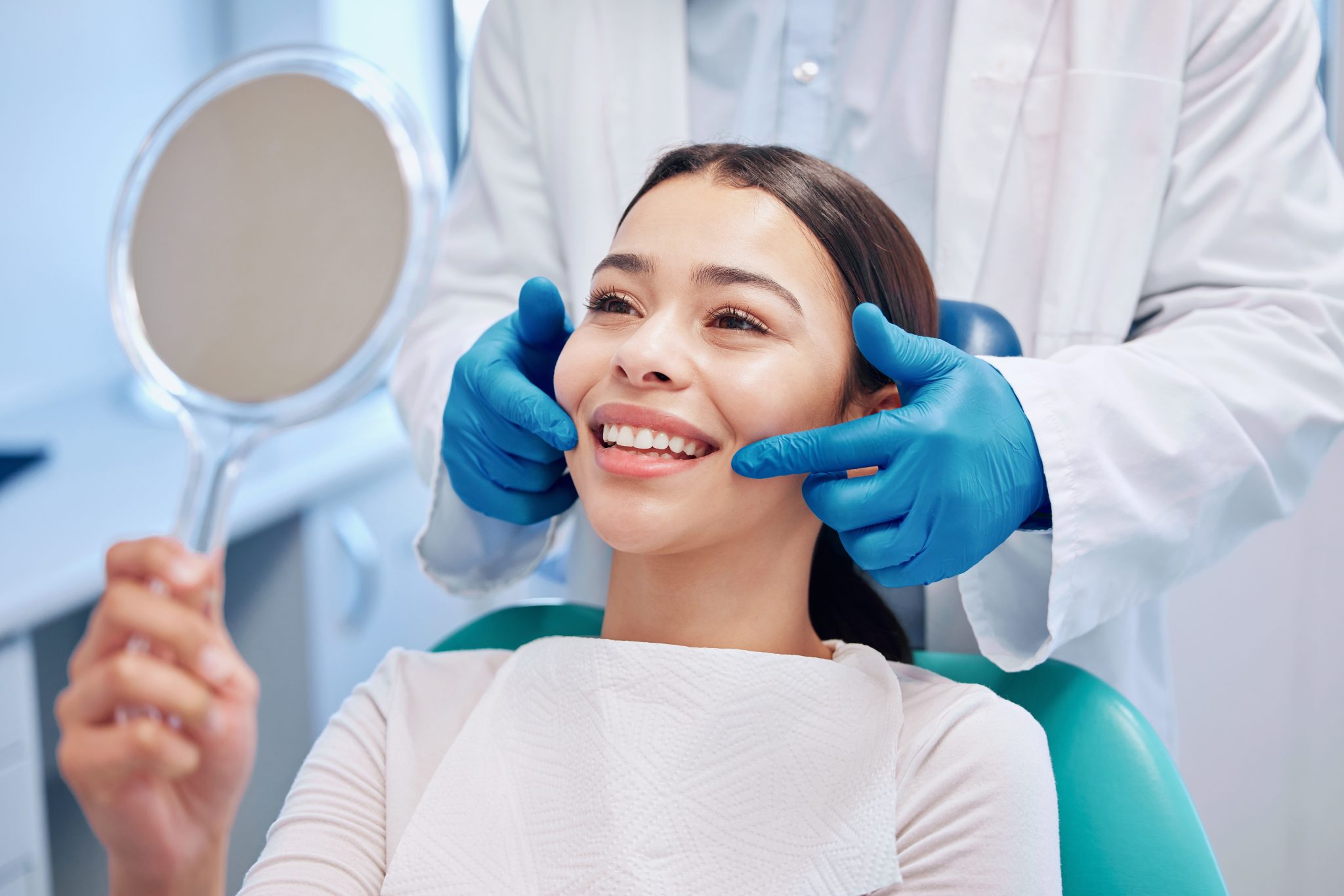
Most people schedule dental visits to keep their teeth clean, prevent cavities, and stay ahead of gum disease. These are important goals, and they are part of what we focus on every day at Dr. Hoover & Dr. Yanda & Associates. Your routine checkups also create a valuable opportunity to look beyond teeth and evaluate the overall health of your mouth.
That is where Oral Cancer Screening comes in. This quick, comfortable part of a preventive exam supports early detection and gives you peace of mind. It fits naturally into regular dental checkups because your dentist already has a clear view of the oral cavity and knows what healthy tissue typically looks like from visit to visit.
What is an oral cancer screening during routine dental visits?
An oral cancer screening is a careful visual and physical examination of the mouth and surrounding areas to look for tissue changes that could suggest mouth or oral cavity cancer. Our dental team checks the lips, cheeks, gums, tongue, and floor of the mouth, along with areas near the throat where oropharyngeal cancers can develop. Regular dental visits help establish what is normal for you, making it easier to notice changes early.
This evaluation often starts with a close look using the naked eye and continues with a gentle physical exam of structures in and around the mouth. Your dentist may also feel the lymph nodes in your neck to check for possible concerns. The goal is to identify anything that looks abnormal so it can be monitored or evaluated further.
Why early detection matters for oral cancer
Like many health conditions, oral cancer is often easier to treat when found in the early stages. Early diagnosis can mean simpler treatment paths and better outcomes, which is why cancer screening is such an important part of preventive health care. The challenge is that the early stages can be subtle, and you may not feel pain or notice changes right away.
Oral cancer awareness starts with knowing that symptoms can be easy to miss at home. A professional screening process adds another layer of protection by catching changes you might not see, especially in areas of the oral cavity that are hard to view in a mirror. That is one reason the American Dental Association encourages dentists to include oral cancer screening as part of comprehensive preventive care.
Signs of oral cancer your dentist looks for
During a screening, your dentist is watching for signs of cancer that stand out from surrounding healthy tissue. Some are obvious, and some are very subtle, which is why an experienced clinical eye and consistent documentation are helpful over time.
Common signs of oral cancer and symptoms of oral cancer can include:
- White or red patches that do not go away
- Sores that do not heal as expected
- Lumps, thickened areas, or rough spots
- Unexplained bleeding or numbness
- Persistent hoarseness or a feeling that something is “stuck” when swallowing
- Ongoing jaw discomfort or changes in how your teeth fit together
Seeing one of these signs does not automatically mean the presence of oral cancer. It does mean you deserve a careful look and, when appropriate, further testing to get clear answers.
Who is at higher risk for oral cavity cancer?
Anyone can develop oral cancer, and screening is valuable for adults of many ages. However, certain risk factors can place someone in a higher risk category, making regular dental checkups even more important.
Risk factors your dentist may ask about include tobacco use, such as cigarettes, cigars, pipes, or smokeless tobacco. Heavy alcohol consumption also increases the risk of oral cancer, especially when combined with tobacco exposure. Your family history and any personal history of oral cancer are also important considerations.
Other factors can influence risk as well, and your health care history helps your dentist tailor the cancer screening process appropriately. If you have questions about your personal risk factors, your dental team can discuss them with you during your visit.
What happens during the screening process?
The screening process is designed to be simple and comfortable. It is typically completed during your dental hygiene exam as part of preventive dentistry, right alongside your cleaning and exam. Knowing what to expect can make the appointment feel even easier.
Here is what the oral cancer screening process often includes:
- A visual examination of the oral cavity, including the tongue, gums, cheeks, palate, and floor of the mouth.
- A physical exam that may involve gently feeling areas of the jaw and neck and checking lymph nodes.
- A review of symptoms and history, such as tobacco use, heavy alcohol consumption, or a family history of oral cancer.
- Documentation and next steps, especially if there are areas that need monitoring, photos, or a follow-up.
Some practices also incorporate screening tools such as a special light, blue light, or a toluidine blue stain to help highlight suspicious tissue. These tools can help a clinician see tissue changes more clearly, but they do not replace a thorough clinical exam. If your dentist recommends any added screening tests, you can expect a clear explanation in patient-friendly language.
When a dentist finds abnormal tissue: what comes next?
If your dentist notices abnormal tissue, the next step depends on what they see and how it looks compared to healthy tissue. Sometimes a small area needs to be rechecked after a short period, especially if it appears linked to irritation, a bite issue, or a healing sore. Other times, your dentist may recommend further testing to ensure nothing is missed.
Further testing can involve diagnostic tests such as a referral for evaluation by an oral surgeon or another appropriate provider. In some cases, additional methods like exfoliative cytology may be discussed as part of gathering more information. If a biopsy is recommended, that step provides the clearest answers, and your dental team can help you understand the referral process and what to expect.
It can also help to know that leading organizations like the American Cancer Society and the National Cancer Institute provide evidence-based information on oral cavity cancer and cancer prevention. Some patients also ask about clinical trials, and your medical team can guide you to reliable resources if that becomes relevant.
How often should you have an oral cancer screening?
For many patients, oral cancer screening fits naturally into regular dental checkups. Seeing your dentist consistently supports early detection because your team can compare what they see today to what they saw last time. That continuity matters, especially when changes are subtle.
Your recommended schedule depends on your age, health history, and risk factors. If you have a history of oral cancer, tobacco use, or other factors that may place you at higher risk, your dentist may encourage you to stay especially consistent with dental visits. If you are unsure what schedule is right for you, ask during your next appointment so you can make a plan that feels manageable and supportive.
How Hoover & Yanda & Associates (KM) supports comfortable preventive care
At Hoover & Yanda & Associates (KM), we believe preventive dentistry works best when you feel informed, respected, and at ease. Oral cancer screening is one of the ways we care for the whole family with thoughtful, comprehensive dentistry, and we aim to keep the experience straightforward and comfortable.
If you are nervous about any part of a dental exam, tell us. We will walk you through the physical examination, explain what we are looking for, and answer questions in plain language. Many patients are relieved to learn how quick the screening is and how naturally it fits into a routine visit.
Schedule your next dental visit in Akron or Cleveland, Ohio
Oral cancer screening is a small part of an exam that can make a meaningful difference in your long-term health. If it has been a while since your last visit, or if you want to make sure your routine dental visits include a thorough cancer screening, we are here to help.
Schedule an appointment at our Akron or Cleveland, Ohio location. We will help you stay on track with regular dental checkups, preventive care, and a screening process designed around your comfort and peace of mind.
If you, your family, or friends need dental care, we would be honored to provide you with state-of-the-art dental care in our modern dental practice. Refer someone you love to someone you trust!
Presented as a service to the community by Doctors Hoover and Yanda,
39 Milford Drive, Hudson, Ohio 44236. 330-650-0360.