
July 1, 2019Hygiene
We know we should floss at least once a day, but not everyone knows the right way to do it. Use this step-by-step guide to find out how to properly floss your teeth:
 Break off about 18 inches of floss and wind most of it around one of your middle fingers. Wind the remaining floss around the same finger of the opposite hand. This finger will take up the floss as it becomes dirty.
- Hold the floss tightly between your thumbs and forefingers.
- Guide the floss between your teeth, using a gentle rubbing motion. Never snap the floss into the gums.
- When the floss reaches the gum line, curve it into a C shape against one tooth. Gently slide it into the space between the gum and the tooth.
- Hold the floss tightly against the tooth. Gently rub the side of the tooth, moving the floss away from the gum with up and down motions. Repeat this method on the rest of your teeth. Don’t forget the back side of your last tooth.
- Once you’re finished, throw the floss away. A used piece of floss won’t be as effective, and could leave bacteria behind in your mouth.
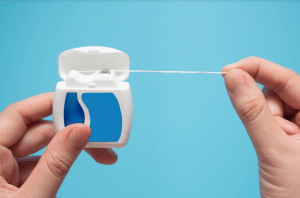 Break off about 18 inches of floss and wind most of it around one of your middle fingers. Wind the remaining floss around the same finger of the opposite hand. This finger will take up the floss as it becomes dirty.
If you, your family or friends need dental care, we would be honored to provide you with state-of-the-art dental care in our modern dental practice. Refer someone you love to someone you trust!
Presented as a service to the community by Doctors Hoover and Yanda,
39 Milford Drive, Hudson, Ohio 44236. 330-650-0360. www.drshooverandyanda.com
 Plaque that is not removed by brushing and cleaning between your teeth can eventually harden into a rough substance called tartar (or calculus). Tartar collects along your gum line and can lead to gum disease. Once tartar forms, only your dentist or dental hygienist can remove it.
 Cleaning between your teeth may help prevent cavities and gum disease. Cleaning between your teeth helps remove a sticky film called plaque. Plaque contains bacteria that feed on leftover food or sugar in your mouth. When that happens, it releases an acid that can eat away at the outer shell of your teeth and cause cavities.
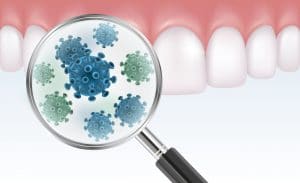 association between two prevalent chronic inflammatory diseases—periodontal disease and rheumatoid arthritis (RA)—the microbiological mechanisms have remained unclear.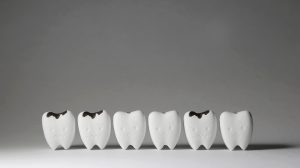

 particular reason or reasons are. For some, it’s the color of the teeth or of old fillings in the teeth that is objectionable. Some teeth may have fractured edges or cracks that show. For others yet, they may be crowded or the reverse, they could have gaps between them. There may be teeth actually missing altogether too.
 Is a spoonful of ice cream or a sip of hot coffee sometimes a painful experience for you? Does brushing or flossing make you wince occasionally? If so, you may have sensitive teeth. Possible causes include:
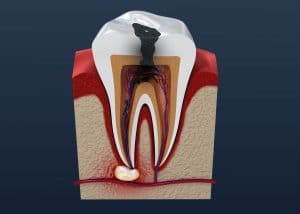 An abscessed tooth is an infection caused by tooth decay, periodontal disease or a cracked tooth. These problems can allow bacteria to enter the pulp (the soft tissue of a tooth that contains nerves, blood vessels, and connective tissue) and can lead to pulp death. When pus builds up it forms a pus-pocket called an abscess. If the abscess is not treated, it can lead to a serious infection in the jawbone, teeth and surrounding tissues.