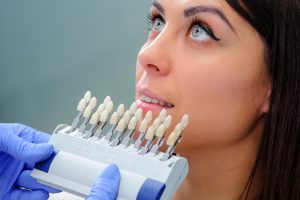

Q: I brush and floss faithfully every morning and night. What can I do for my teeth during the work day?
A: Along with scheduling regular visits to the dentist, maintaining a good regimen of dental care at home is one of the most important things you can do to protect your oral health. Whether it is work or some other activity that keeps you busy during the day, here are some steps you can take to keep your mouth fresh and healthy during the day:
Don’t snack on foods that cling to your teeth, like candy. Keep a toothbrush and some toothpaste at work, if possible, and brush after lunch. If brushing isn’t feasible, use a paper towel or napkin to wipe your teeth after lunch. Even that wiping will remove some plaque, bacteria, and leftover food particles.
Chew sugarless gum if it is appropriate in your daytime circumstance. Chewing gum stimulates production of saliva, which is a natural mouth cleanser. Drink plenty of water during the day, and particularly after eating. This, too, will help wash away the food particles that cavity-causing bacteria thrive on. If you drink fruit juices or soda during the day, use a straw to minimize your teeth’s contact with the acid in the drinks. Sipping coffee containing sugar or creamer all day long often causes tooth decay. It is much better to drink the coffee with a meal and be done with it.
If you, your family, or friends need dental care, we would be honored to provide you with state-of-the-art dental care in our modern dental practice. Refer someone you love to someone you trust!
Presented as a service to the community by Doctors Hoover and Yanda,
39 Milford Drive, Hudson, Ohio 44236. 330-650-0360. www.drshooverandyanda.com




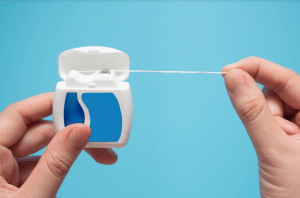 Break off about 18 inches of floss and wind most of it around one of your middle fingers. Wind the remaining floss around the same finger of the opposite hand. This finger will take up the floss as it becomes dirty.
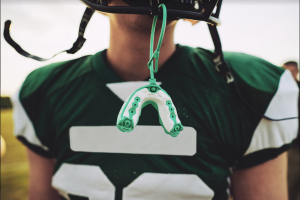 of mouthguards: the “boil and bite” type and the custom-made type. The “boil and bite” mouthguard is fitted by the athlete him or herself by dipping it into boiling water for a couple of minutes, and then forming it to the teeth while it is soft and moldable. This is the less costly type, can be re-molded by reboiling it if need be and for many people it works fine. Some people require a more precise fit than a “boil and bite” mouthguard can provide. For them, their dentist can make a custom-made mouthguard. The dentist makes impressions of the teeth and a laboratory-processed mouthguard is then fabricated. It fits much more comfortably because of the custom-fit.
  association between two prevalent chronic inflammatory diseases—periodontal disease and rheumatoid arthritis (RA)—the microbiological mechanisms have remained unclear.