
Aggressive tooth brushing: If you brush your teeth too hard or the wrong way, it can cause the enamel on your teeth to wear away and your gums to recede.
Insufficient dental care: Inadequate brushing, flossing, and rinsing with antibacterial mouthwash makes it easy for plaque to turn into calculus (tartar)—a hard substance that builds on and between your teeth and can only be removed by a professional dental cleaning. It can lead to gum recession.
Hormonal changes: Fluctuations in female hormone levels during a woman’s lifetime, such as in puberty, pregnancy, and menopause, can make gums more sensitive and more vulnerable to gum recession.
Tobacco products: Tobacco users are more likely to have sticky plaque on their teeth that is difficult to remove and can cause gum recession.
Grinding and clenching your teeth: Clenching or grinding your teeth can put too much force on the teeth, causing gums to recede.
Crooked teeth or a misaligned bite: When teeth do not come together evenly, too much force can be placed on the gums and bone, allowing gums to recede.
Body piercing of the lip or tongue: Jewelry can rub the gums and irritate them to the point that gum tissue is worn away.
If you, your family or friends need dental care, we would be honored to provide you with state-of-the-art dental care in our modern dental practice. Refer someone you love to someone you trust!
Presented as a service to the community by Doctors Hoover and Yanda,

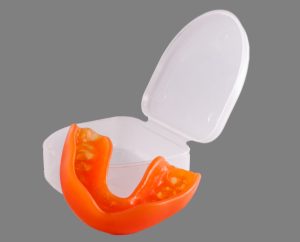 ment: Talk to your dentist about when is the right time to replace your mouthguard, but replace it immediately if it shows sign of wear, is damaged or ill-fitting. Teens and children may need to replace their mouthguards more often because their mouths are still growing and changing. Between games, it’s important to keep your mouthguard clean and dry. Here are some tips for making sure your mouthguard is always ready to go:
 Mouthguards help cushion a blow to the face, minimizing the risk of broken teeth and injuries to your lips, tongue, face or jaw. They typically cover the upper teeth and are a great way to protect the soft tissues of your tongue, lips and cheek lining. Your top teeth take the brunt of trauma because they stick out more. Your bottom teeth are a little more protected because they are further back.

 reaction to an infection. A toothache certainly is one of life’s more unpleasant experiences. It can start as a dull throb and escalate to the point of excruciating pain. A couple of things are certain: a toothache is a sign of a problem and that problem should get prompt professional attention.