
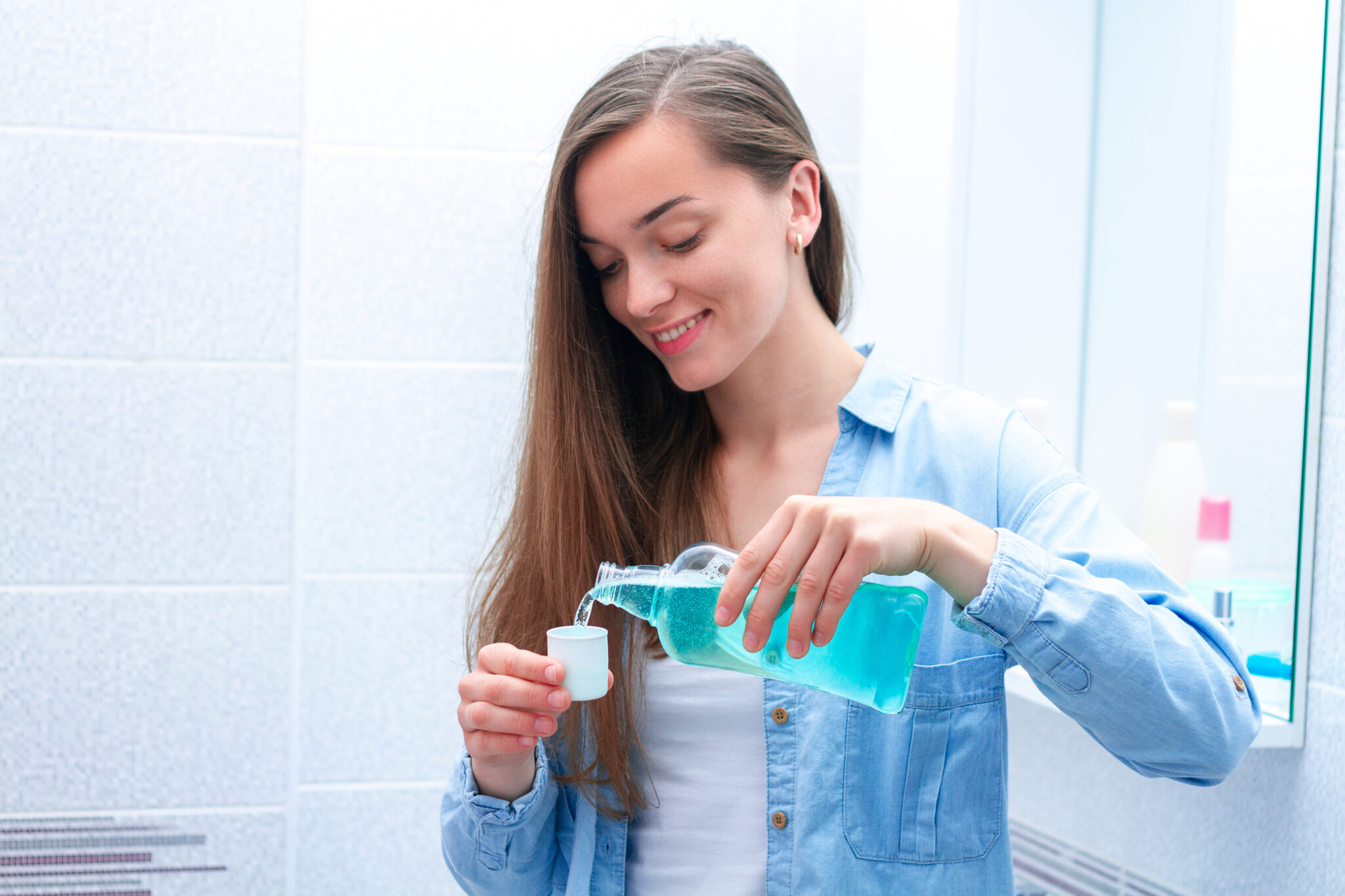
Mouth rinses can play a useful part in your home oral care routine. The main caution, however, is that the use of a mouth rinse, even one carrying the American Dental Association Seal of Approval, in no way takes the place of brushing and flossing. In fact, one danger with excessive use of over-the-counter mouth rinse is that the fresh smell and sensation it gives to your mouth could mask an unpleasant taste or odor that is the first tell-tale sign of a condition like gum disease. That having been said, a number of mouth rinses have been recognized by the ADA as effective in helping prevent the accumulation of plaque above the gum line.
When selecting a mouth rinse, look for the ADA Seal of Approval, which shows that the product has been objectively evaluated for safety and effectiveness by an independent group of experts. Dentists suggest that you brush and floss immediately before using a mouth rinse because its effects are most productive on clean teeth. A variety of prescription mouth rinses are available to deal with specific oral health problems too. Talk with your dentist to get advice on what sort of mouth rinse is going to be most effective given the particular needs of your oral health situation.
If you, your family or friends need dental care, we would be honored to provide you with state-of-the-art dental care in our modern dental practice. Refer someone you love to someone you trust!
Presented as a service to the community by Doctors Hoover and Yanda,
39 Milford Drive, Hudson, Ohio 44236. 330-650-0360. www.drshooverandyanda.com



 How often should I visit my dentist if I have dry mouth?
 Can I prevent dry mouth?
 Your mouth needs saliva to work properly. Saliva keeps your mouth moist, and it helps to break down your food and helps you to swallow. It also acts as a cleanser. It is constantly washing around your mouth and teeth, fighting tooth decay and helping to keep your teeth clean. Dry mouth or ‘xerostomia’ is a condition which affects the flow of saliva, causing your mouth to feel dry.

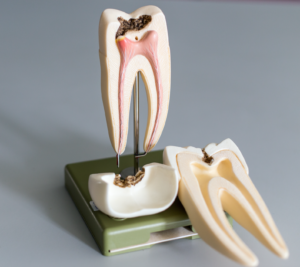 A root canal requires one or more office visits and can be performed by a general dentist or an endodontist. An endodontist is a dentist who specializes in the diagnosis and treatment of diseases and injuries of the dental pulp or the nerve of the tooth. Our office is very experienced in performing root canal therapy, so we do them regularly. We do refer to endodontists for more complicated cases.