
 Composite fillings are usually more expensive than traditional amalgam fillings because they require a more sophisticated process, more expensive materials and additional office equipment. Composite materials offer an aesthetic alternative to traditional amalgam materials. Because composites can be bonded to teeth, they provide a better seal against leakage and further decay. As such, people who have previously received amalgam fillings often return to their dentist to have them replaced with composite.
Safety and Appearance: In addition to having a more pleasing and natural tooth-like appearance, porcelain and composite fillings have the potential advantage of not containing mercury or other metals that may contribute to sensitivity or toxicity. Mercury toxicity from amalgam fillings is a controversial subject, though no research to date has been able to show any risks of having mercury as a component of amalgam fillings. However, many patients do have metal sensitivities and some have reported a metal taste after the placement of amalgam.
Durability: Composites previously were not as durable as amalgams. However, dental manufacturers have made great strides in improving the strength of composite resin materials, to the effect that composite fillings now have the potential to be used for all teeth, including molars. Furthermore, composite materials often require less tooth preparation and may not weaken the affected tooth as much as amalgam fillings, which often require more extensive tooth preparation. However, amalgam fillings do have a long-term track record.
If you, your family or friends need dental care, we would be honored to provide you with state-of-the-art dental care in our modern dental practice. Refer someone you love to someone you trust!
Presented as a service to the community by Doctors Hoover and Yanda,
39 Milford Drive, Hudson, Ohio 44236. 330-650-0360. www.drshooverandyanda.com
 Composite fillings are usually more expensive than traditional amalgam fillings because they require a more sophisticated process, more expensive materials and additional office equipment. Composite materials offer an aesthetic alternative to traditional amalgam materials. Because composites can be bonded to teeth, they provide a better seal against leakage and further decay. As such, people who have previously received amalgam fillings often return to their dentist to have them replaced with composite.
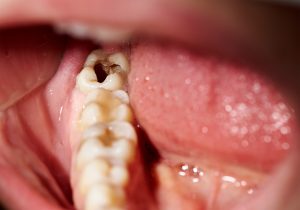
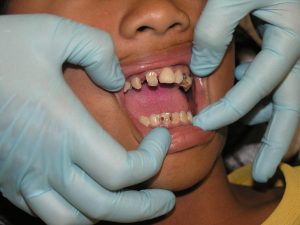 One of the more common oral health issues discovered during scheduled cleanings is dental caries (tooth decay). Your dentist will examine your teeth using a dental instrument called an explorer and may also take an X-ray to determine the extent and exact location of the cavity and decay. In our office, we also use a laser to help detect decay.
 Always ask your dentist if you’re not sure how your nutrition (diet) may affect your oral health. Conditions such as tooth loss, pain or joint dysfunction can impair chewing and are often found in elderly people, those on restrictive diets and those who are undergoing medical treatment. People experiencing these problems may be too isolated or weakened to eat nutritionally balanced meals at a time when it is particularly critical. Talk to your dental health professional about what you can do for yourself or someone you know in these circumstances.
 You may be able to prevent two of the most common diseases of modern civilization, tooth decay (caries) and periodontal (gum) disease, simply by improving your diet. Decay results when the teeth and other hard tissues of the mouth are destroyed by acid products from oral bacteria. Certain foods and food combinations are linked to higher levels of cavity-causing bacteria. Although poor nutrition does not directly cause periodontal disease, many researchers believe that the disease progresses faster and is more severe in patients whose diet does not supply the necessary nutrients.
 Talk to a dentist about sealants. Dental sealants are another good way to help avoid a cavity. Sealants are thin, plastic coatings painted onto the chewing surfaces of the back teeth, or molars. Here’s why sealants are helpful: The chewing surfaces of back teeth are rough and uneven because they have small pits and grooves. Food and bacteria can get stuck in the pits and grooves and stay there a long time because toothbrush bristles can’t easily brush them away. Sealants cover these surfaces and form a barrier that protects teeth and prevents food and bacteria from getting trapped there.
 Make sure your child brushes! Brushing with fluoride toothpaste is important for preventing cavities. Here’s what you should know about brushing:
 Keep an eye on how often your child eats, as well as what she eats.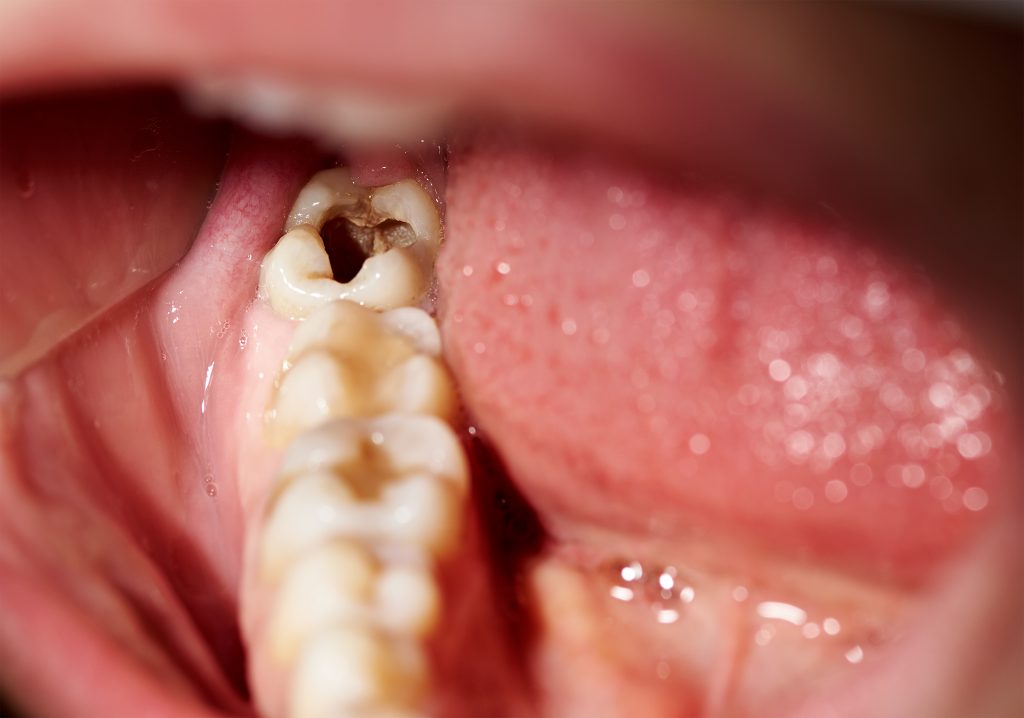
 Fluoride is a mineral that can prevent tooth decay from progressing. It can even reverse, or stop, early tooth decay.
 Our mouths are full of bacteria. Hundreds of different types live on our teeth, gums, tongue and other places in our mouths. Some bacteria are helpful. But some can be harmful, like those that play a role in the tooth decay process. Tooth decay is the result of an infection with certain types of bacteria that use sugars in food to make acids. Over time, these acids can create a cavity in the tooth.