
Research has indicated that women with periodontal disease may be at risk of adverse pregnancy outcomes, such as giving birth to a pre-term or low-birth-weight baby, report the Academy of Periodontology and the European Federation of Periodontology. Periodontal disease is a chronic, bacteria-induced, inflammatory condition that attacks the gum tissue and in more severe cases, the bone supporting the teeth.
Several research studies have suggested that women with periodontal disease may be more likely to deliver babies prematurely or with low birth weight than mothers with healthy gums. According to the Center for Disease Control and Prevention, babies with a birth weight of less than 5.5 pounds may be at risk of long-term health problems such as delayed motor skills, social growth, or learning disabilities. Other issues associated with pre-term birth include respiratory problems, vision and hearing loss, or feeding and digestive problems.
Routine brushing and flossing, and seeing a dentist, or dental hygienist for a comprehensive periodontal evaluation during pregnancy may decrease the chance of adverse pregnancy complications.
If you, your family or friends need dental care, we would be honored to provide you with state-of-the-art dental care in our modern dental practice. Refer someone you love to someone you trust!
Presented as a service to the community by Doctors Hoover and Yanda,
39 Milford Drive, Hudson, Ohio 44236. 330-650-0360. www.drshooverandyanda.com
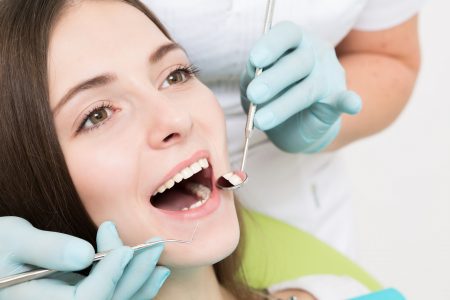
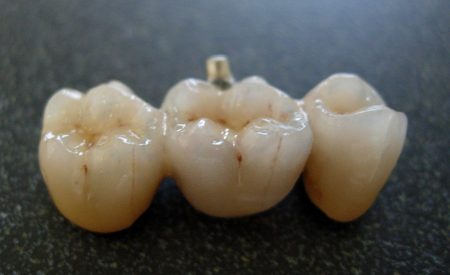 Did you know that the average adult between the ages of 20 and 64 has three or more decayed or missing teeth? If you are missing one or more teeth, there are plenty of reasons to correct the problem. For one thing, a large space between your teeth may affect how you speak or eat. Even if it’s not noticeable, a missing molar can affect how you chew. Remaining teeth may shift which can lead to tooth decay and bone loss.


 People with Alzheimer’s disease may need some help with basic grooming and dressing tasks, including taking care of their teeth and mouth. As a caregiver, you can help!
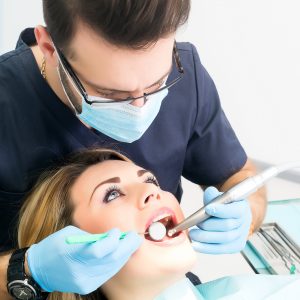 To perform the crown procedure, your dentist prepares the tooth and makes a molded impression or a digital scan of your teeth to send to a dental laboratory. A custom-made temporary crown is created during this visit to protect the tooth while the final restoration is being made in the dental laboratory. Once completed, the crown will be cemented or adhesively bonded at a second visit.
 Dental crowns, also known as “caps,” preserve the functionality of damaged teeth. This common dental restoration may be used to protect a cracked tooth, restore functionality of a tooth with excessive decay or replace a pre-existing crown. It protects a weakened tooth with a custom-designed material.