
Q: Is nail-biting harmful to your teeth?
A: Nail-biting, a habit indulged in by thousands of adults and children, is not good practice for several reasons related to oral health. Regarding the teeth, if the habit develops when a child is very young, it can contribute to the development of a gap between the front teeth.
But it’s not just the teeth and gums that are put at risk through the habit of biting nails or fingers. Any activity that requires holding the teeth at unnatural angles for extended periods can injure the jaw joint, also known as the temporomandibular joint (TMJ). The injury is sometimes referred to as TMJ syndrome. Over time, the habit can also stretch the muscles in the jaw. That can cause pain and an imbalance in the TMJ.
Some dentists and physicians recommend coating the fingers with a non-toxic but unpleasant-tasting lotion. Others recommend putting a bandage on the finger just to serve as a reminder. Whatever the technique, it’s a good idea to come up with some mechanism for stopping the habit. Otherwise, a person may be facing the time, expense, and inconvenience of straightening teeth and/or treating the pain of TMJ syndrome.
If you, your family, or your friends need dental care, we would be honored to provide you with state-of-the-art dental care in our modern dental practice. Refer someone you love to someone you trust!
Presented as a service to the community by Doctors Hoover and Yanda,
39 Milford Drive, Hudson, Ohio 44236. 330-650-0360.
 or your friends need dental care, we would be honored to provide you with state-of-the-art dental care in our modern dental practice. Refer someone you love to someone you trust!
 or your friends need dental care, we would be honored to provide you with state-of-the-art dental care in our modern dental practice. Refer someone you love to someone you trust!
 While tooth enamel is the hardest element in your body, it is susceptible to wear and tear just like any other part of the body. Some foods and beverages that passes through our mouth are more corrosive to enamel than are others. For instance, though fruit and fruit juice are good for us in some ways, those that contain citric acid, like oranges, lemons, and grapefruits, are potentially damaging to teeth enamel. You should also consume carbonated drinks in moderation. In addition, you even also need to be careful about the toothpaste you use. You should avoid toothpastes with abrasives in them, like charcoal toothpastes, even though they may be marketed as tooth-whitening, stain-removing marvels.
 Acids in sugar-free beverages can erode tooth enamel. People find carbonated beverages refreshing. Enjoy them in moderation and preferably with meals. The American Dental Association offers these tips to reduce tooth erosion from acidic food and beverages:
 Q
Q Acidic foods and beverages can wear away the enamel that protects teeth, a process known as tooth erosion. Tooth erosion is permanent and may open the door for bacteria to cause cavities or infection. It can also make teeth appear discolored, as white enamel is worn away to expose the yellow layer below called dentin.
 Q
Q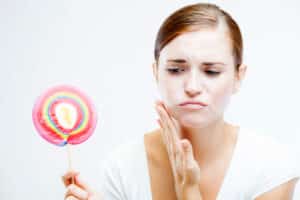 The foods we eat on a regular basis influence the makeup of the bacteria — both good and bad — in our mouths. While it well known that sugary foods contribute to tooth decay, researchers are finding that they also play a large role in periodontal disease as well as overall systemic health.